
 Available in US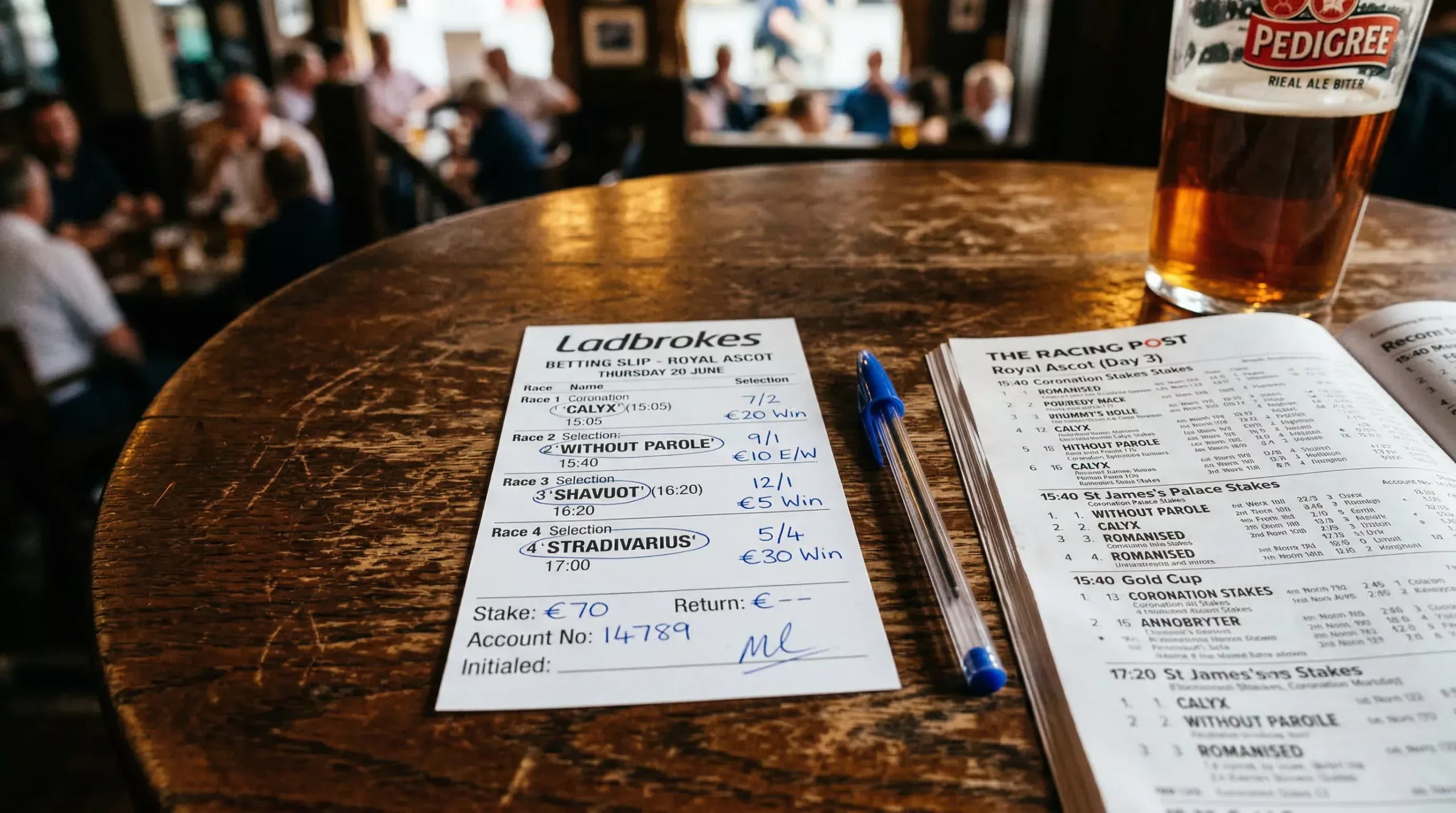
The accumulator is horse racing’s lottery ticket — a small stake that produces headline-grabbing returns when every leg obliges, and a losing slip when even one selection fails. Four winners at generous prices can turn a £1 bet into a four-figure return. The maths is intoxicating, the social media screenshots are irresistible, and the reality is that most accumulators lose.
None of that makes accumulators a bad bet. It makes them a bet that requires honesty about what they are: high-risk, high-reward wagers where entertainment value is part of the price. The punters who enjoy accumulators without damaging their bankroll are the ones who build them intelligently, stake them modestly, and understand the probability arithmetic behind the big odds, bigger risk label. Here is how to construct an acca that gives you the best chance of collecting.
How a Horse Racing Accumulator Works: Acca Betting Explained
An accumulator links two or more selections into a single bet. The returns from the first selection roll into the second, the returns from the second roll into the third, and so on. Every leg must win for the bet to pay out. One loser — anywhere in the chain — and the entire accumulator is dead.
The minimum is a double (two selections). A treble adds a third. Four or more selections create what most punters call an acca. There is no formal upper limit, though most bookmakers cap the number of legs or the maximum payout. A six-fold or seven-fold accumulator is not unusual at a Saturday meeting, though the probability of all legs winning shrinks with each addition.
The return calculation is multiplicative. If your four selections are priced at 2/1, 3/1, 5/2 and 7/2, you multiply the decimal equivalents: 3.00 × 4.00 × 3.50 × 4.50 = 189.00. A £1 stake returns £189. The appeal is obvious — those are individual prices you might back as singles without a second thought, but combined, they produce a return that no single bet could match.
The volume of accumulator bets in UK racing is considerable. Receptional’s analysis of Flutter platforms recorded 34.9 million bets across the 2024 Cheltenham Festival, and accumulators are among the most popular formats during festival weeks, when a packed card of competitive races gives punters multiple strong opinions to combine. The bookmakers know this — which is why accumulator bonuses, insurance offers and cash-out features are all calibrated to attract acca bettors.
Picking Your Selections — Quality Over Quantity
The most common error in accumulator construction is starting with the number of legs and then finding horses to fill them. “I want a six-fold” is the wrong opening sentence. The right one is: “How many strong selections do I have today?” If the answer is two, build a double. If it is four, build a four-fold. Never pad an accumulator with selections you do not genuinely fancy just to reach a target number of legs.
Quality over quantity is the principle, and it applies at every stage. Each leg should be a bet you would place as a single — a selection backed by form analysis, conditions assessment and a price that represents value. If any leg exists in the accumulator only because it is a “banker” at short odds, ask yourself whether that short price is adding enough probability to justify its inclusion. A 1/3 shot adds minimal return to the accumulator while still carrying a real chance of failure.
Field size matters. BHA data for 2025 shows that average field sizes run to 8.90 on the Flat and 7.84 over jumps, rising to 11.02 and 9.41 at Premier fixtures. Larger fields mean more unpredictability, which is the enemy of accumulator success. An acca built on small-field novice chases where the favourite has a genuine 50%+ chance per leg is structurally more likely to land than one constructed from big-field handicaps where no horse has better than a 10% winning probability.
Mixing codes — Flat and jumps in the same accumulator — adds complexity. The form factors differ, the going impact differs, and the non-completion risk in jump racing introduces a variable that Flat racing does not have. If you are going to mix codes, ensure that each leg has been assessed independently on its own terms rather than bolted on as an afterthought.
Stake Sizing and System Bet Alternatives (Trixie, Patent)
Stake sizing for accumulators should reflect their probability of winning, which is low. A reasonable guideline is to allocate no more than 1-2% of your bankroll to any single accumulator. If your bankroll is £200, a £2 to £4 acca is appropriate. This is not conservative — it is realistic. The probability of a four-fold landing is typically in the low single digits, and stakes should match that expectation.
If you find yourself wanting to stake more — because the potential return is exciting, because you “feel good” about today’s card, because one leg looks like a certainty — that is the exact moment to step back. Accumulators exploit emotional staking more than any other bet type, and the compounding return figures are designed to make you forget the compounding probability against you.
System bets offer a structural alternative that softens the all-or-nothing nature of a straight accumulator. A Trixie covers three selections with four bets: three doubles and one treble. Two winners guarantee a return. A Patent adds three singles to the Trixie (seven bets total), ensuring that even one winner pays something. A Lucky 15 covers four selections with 15 bets and often comes with bookmaker bonuses — double odds for one winner, a consolation payment if all four lose.
The trade-off is cost. A Lucky 15 at £1 per line costs £15. If only two of your four selections win at modest odds, the return might barely cover the outlay. System bets protect against a single-leg failure but require enough winners at decent prices to be worthwhile. They suit punters who want accumulator-style engagement without the binary outcome — and who are willing to pay a higher total stake for that insurance.
Five Common Accumulator Mistakes to Avoid
Certain mistakes recur in accumulator betting with remarkable consistency. Avoiding them will not guarantee success, but it will stop you from making failure more likely than it needs to be.
Overloading legs. Every additional selection reduces the probability of the accumulator landing. A four-fold at average odds of 3/1 per leg has a roughly 1.5% chance of success. A seven-fold at the same prices drops to about 0.02%. The diminishing returns on extra legs are savage, and the headline payout figure disguises just how unlikely collection becomes.
Ignoring the going. An accumulator built at 9am may look solid, but if the going changes after morning inspections — a downpour turning Good to Soft, or a drying wind taking the ground from Soft to Good — one or more of your selections may no longer suit the conditions. Checking going updates before the first race is not paranoia; it is basic due diligence.
Chasing yesterday’s losses. A losing accumulator on Saturday should not generate a bigger accumulator on Sunday in an attempt to recover. This is the textbook escalation pattern that responsible gambling frameworks are designed to interrupt. Treat each accumulator as independent.
Neglecting cash-out. Most bookmakers offer partial and full cash-out on accumulators. If three of your four legs have won and the fourth is about to run, the cash-out value may represent a guaranteed profit that you should seriously consider taking — especially if the final leg is a competitive handicap with no standout favourite.
Staking too much. Worth repeating: accumulators are entertainment bets. Staking serious money on a bet with a 1-2% hit rate is not strategy — it is hope dressed up as conviction. Keep stakes small, expectations honest, and enjoyment high.
