
 Available in US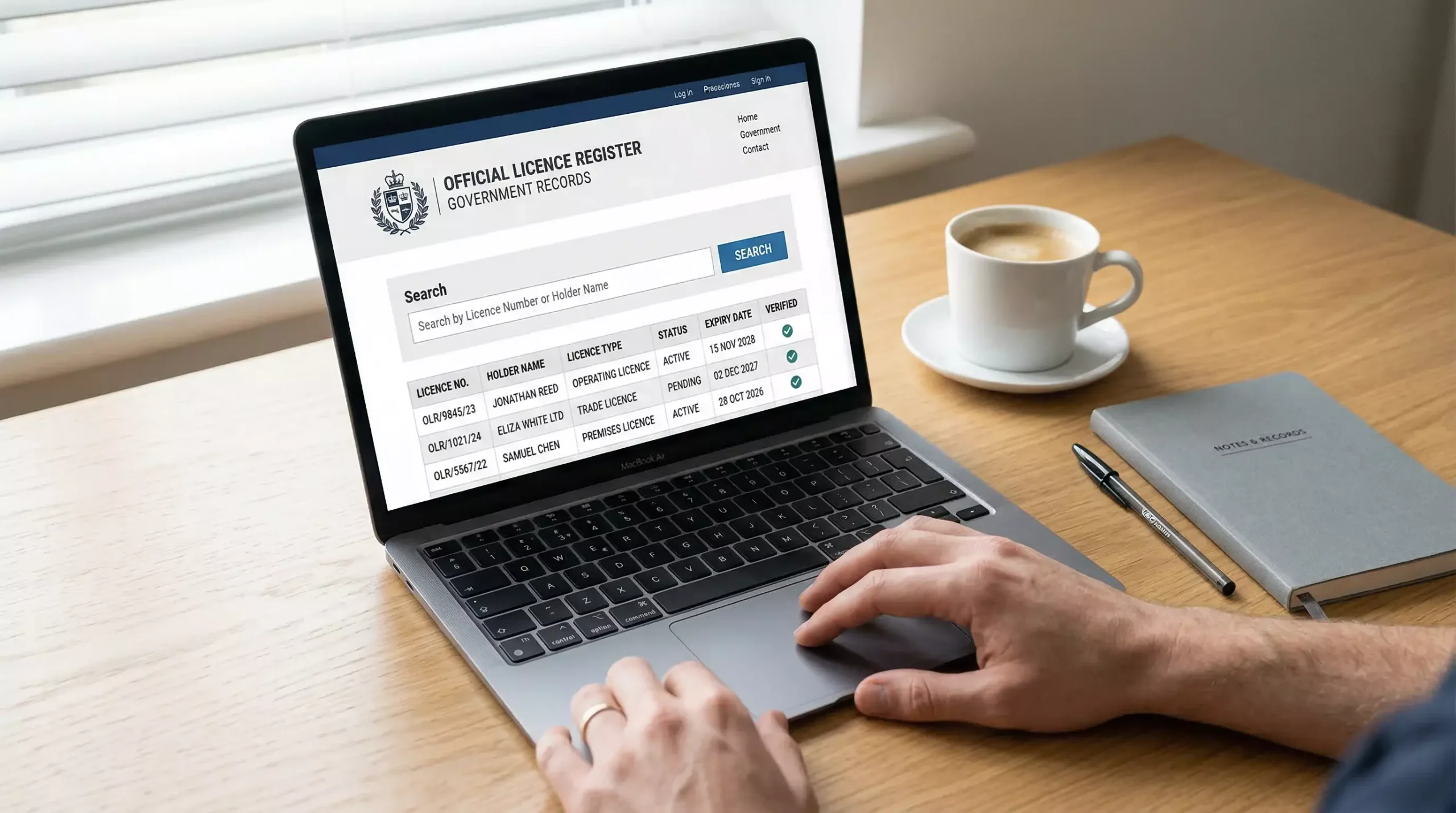
Every betting site that legally operates in the United Kingdom must hold a licence from the Gambling Commission — the UKGC. This is not a recommendation or a best practice; it is a legal requirement. The licence means the operator has met standards for player protection, financial transparency and responsible gambling. Without it, a site is operating outside the law, and any punter using it has no regulatory recourse if something goes wrong.
For horse racing bettors, where significant sums can move through an account over the course of a busy festival week, knowing that your bookmaker is licensed is not paranoia — it is basic due diligence. The good news is that checking a licence takes less than two minutes. The process is public, the register is searchable, and the information is free. Licence first, bet second is the rule that protects your money before you risk a single pound.
What a UKGC Licence Means for UK Horse Racing Bettors
A UKGC licence is a contract between the operator and the regulator, and its conditions exist to protect you. When a bookmaker holds a valid licence, it has agreed to a set of obligations that cover how it handles your money, how it markets its products, and how it supports customers who may be at risk of harm.
Your funds must be protected. Licensed operators are required to hold customer funds in segregated accounts or to have arrangements in place so that, in the event the company becomes insolvent, customer balances are ring-fenced. The level of protection varies — the UKGC categorises it as basic, medium or high — and operators must disclose their protection level on their website. This is a detail worth checking, particularly if you hold large balances in your account during festival weeks when deposits and withdrawals are frequent.
Dispute resolution is another critical benefit. If you have a dispute with a licensed bookmaker — a settled bet you believe was calculated incorrectly, a bonus that was not applied, or an account restriction you consider unfair — you have the right to escalate to an independent Alternative Dispute Resolution (ADR) provider. Every licensed operator must name its ADR provider on its website. With an unlicensed site, no such mechanism exists: you are entirely at the operator’s mercy.
Responsible gambling obligations are enforceable. Licensed bookmakers must offer deposit limits, cooling-off periods, self-exclusion tools and links to support services like GamCare and the National Gambling Helpline. These are not optional features — they are licence conditions. The UKGC monitors compliance and can fine, suspend or revoke licences for operators that fail to meet the required standards. As a bettor, this framework creates a safety net that disappears the moment you step outside the regulated market.
Step-by-Step — How to Check a Bookmaker’s Licence
Checking whether a bookmaker holds a valid UKGC licence is a simple process that takes a matter of seconds. Here is how to do it.
Start at the bookmaker’s website. Scroll to the footer — the bottom of any page. Every licensed operator is required to display its Gambling Commission licence number and a link to the Commission’s public register. The licence number is typically a five- or six-digit figure, sometimes preceded by the operator’s company name. If you cannot find any reference to a UKGC licence in the footer, that is an immediate red flag.
Next, verify the licence on the Gambling Commission’s own website. Navigate to the public register — accessible at gamblingcommission.gov.uk — and use the search function to look up the operator by name or licence number. The register will confirm whether the licence is active, show the date it was issued, list the activities it covers (remote betting, remote casino, etc.) and note any regulatory actions or conditions attached to it. A licence marked as “active” with no special conditions is what you want to see.
Pay attention to the licence type. A remote operating licence is what an online bookmaker needs to offer betting to UK customers. A non-remote operating licence covers physical betting shops. Some operators hold both. If a site claims to offer online betting to UK customers but its licence only covers non-remote activity — or worse, if no licence appears on the register at all — do not deposit a penny.
Finally, check for recent regulatory actions. The Gambling Commission publishes enforcement decisions on its website, including fines, licence suspensions and formal warnings. A bookmaker that has recently been sanctioned for failing to protect vulnerable customers or for anti-money-laundering deficiencies may still hold a valid licence, but the sanction history tells you something about how the operator runs its business. This is the kind of background check that takes five minutes and can save you considerable trouble.
The UK Licensing Landscape — Numbers and Types
The UK licensing landscape is larger and more complex than most punters appreciate. The Gambling Commission does not issue a single type of licence — it operates a tiered system covering operating licences (held by the companies), personal management licences (held by key individuals within those companies) and personal functional licences (held by employees in customer-facing roles).
On the operating side, Gambling Commission data for Q1 of FY 2025-26 shows that the UK gambling industry generated gross gambling yield of approximately £3.3 billion in a single quarter, supported by a network that includes 5,789 betting shops alongside hundreds of remote operators. The shift towards online is unmistakable: remote betting and gaming now accounts for the majority of industry revenue, and the number of physical shops has been contracting steadily for years.
As Helen Bryce, Head of Statistics at the Gambling Commission observed when publishing the latest industry statistics, the data represents a crucial transparency tool that allows the public, the industry and regulators to assess the health and direction of the market. For punters, the headline takeaway is that the regulated UK market is vast, well-documented and subject to public scrutiny — a stark contrast to unregulated alternatives where no such oversight exists.
The licensing framework also distinguishes between different gambling activities. A bookmaker licensed for remote betting can offer horse racing markets, but may not necessarily hold a licence for remote casino games or virtual sports. The public register specifies exactly which activities each licence covers. If a site is offering you products that fall outside the scope of its licence, it is operating illegally in that area, even if it holds a valid licence for other activities.
What Happens if You Bet With an Unlicensed Operator
The risks of betting with an unlicensed operator are not hypothetical — they are documented and they are growing. Research by Yield Sec estimates that the UK black market in gambling accounts for approximately 9% of the total market, worth around £379 million in the first half of 2025. That figure represents real money held in accounts with no regulatory protection, no dispute resolution pathway and no guarantee that winnings will ever be paid.
An unlicensed operator has no obligation to protect your funds. If the company folds, your account balance disappears with it. There is no segregated account, no insolvency protection and no ADR body to appeal to. Complaints go nowhere because there is no regulator listening. In practical terms, you are handing your money to an entity that has made a deliberate decision to operate outside the law — and hoping it treats you fairly anyway.
The marketing of unlicensed sites is often sophisticated. They may mimic the look and feel of established UK bookmakers, display fake licence numbers, and offer promotions that sound too good to be true — because they are. Some target horse racing specifically, knowing that festival weeks and big-race days drive casual punters to search for new accounts and better offers. A quick check on the Gambling Commission register is the only reliable way to confirm legitimacy.
From a legal perspective, it is not a criminal offence for a UK consumer to place a bet with an unlicensed operator. The offence lies with the operator, not the punter. But the absence of criminal liability does not make the practice safe. You are betting with no safety net, no avenue for redress, and no assurance that the odds displayed, the payouts calculated and the withdrawals processed are handled honestly. Licence first, bet second is not a slogan — it is common sense.
